5 Hidden Features of the Thinkpad X9 15 Aura Edition 2025 You Must Know About
Introduction
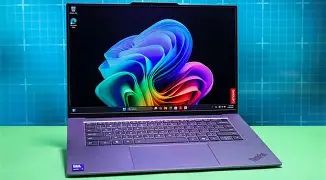
The Thinkpad X9 15 Aura Edition 2025 positions itself as a premium 15-inch workstation that blends classic ThinkPad durability with a modern, design-forward aesthetic. Beyond the expected mix of high-end processors, OLED display options, and a refined keyboard, the Aura Edition hides several features that are likely to matter most to power users and frequent travelers — but that don't always show up in spec sheets. This article explores five lesser-known capabilities of the X9 15 Aura Edition, explains when they matter in real-world use, and helps buyers decide whether those hidden advantages align with their priorities.
Why these hidden features matter
Buyers typically evaluate laptops by CPU, RAM, storage, battery life, and display. Those metrics are important, but practical day-to-day value often comes from subtle hardware and firmware integrations: faster wake times, adaptable cooling, modular connectivity, deeper privacy protections, and intelligent display behavior. The Thinkpad X9 15 Aura Edition includes a set of such features that improve productivity and longevity in ways that buyers routinely care about but may overlook when scanning a spec sheet.
5 Hidden Features — Detailed Breakdown
1. Persistent Resume (Ultra-Fast Hibernation + NVMe Cache)
One of the most notable hidden conveniences is the X9's persistent resume system. Instead of relying solely on traditional RAM-to-disk hibernation, the Aura Edition combines a firmware-optimized hibernation process with a reserved high-speed NVMe partition that caches active memory pages. The result: resumes from deep sleep that are measurably faster than standard hibernate or cold boot, and with lower power draw while idle.
Real-world use case: For professionals who switch between a docking station and battery-powered sessions multiple times per day — for example, hybrid office workers or frequent presenters — the ability to close the lid and resume to a full desktop in seconds saves minutes over the day, which translates to reduced frustration and fewer interrupted workflows. Photographers and video editors working with large projects benefit because open applications and large buffers remain available immediately after resume.
What buyers care about: reliability of resume, data integrity, and whether the feature affects available storage capacity. The Aura Edition dedicates a small, fixed portion of the primary NVMe drive for caching; capacity is typically negligible for most users, and recovery mechanisms are in place should the reserved region need to be reclaimed during service.
2. Adaptive Color and Power Display (Ambient-Aware OLED)
The Aura Edition's display goes beyond high resolution and wide color gamut. It implements adaptive tone mapping and ambient-aware brightness that dynamically adjusts color temperature, HDR curve, and power state based on content and surrounding lighting. This is particularly useful on OLED panels where contrast is extreme and color shifts can be more noticeable in variable lighting.
Practical impact: During outdoor or transit use, the panel automatically brightens and shifts tone to preserve legibility without blowing through battery life. In creative workflows — color grading or photo editing — an "accuracy lock" mode temporarily stabilizes the panel to avoid automatic corrections while fine-tuning color. When streaming HDR content, the system adjusts tone-mapping to preserve highlight detail without excessive clipping.
What buyers care about: accuracy for creators, battery trade-offs for commuters, and whether auto adjustments can be disabled. The system exposes granular controls so users can choose fully automatic behavior, a content-aware mode, or a locked color profile for color-critical work.
3. Modular I/O Sled (Aura Connect Bay)
Hidden in the hinge and left chassis bay is a modular I/O sled that enables tool-free swapping of small expansion modules. Instead of a simple SD reader or a fixed port array, the X9 offers an Aura Connect Bay that accepts modules such as a second NVMe drive, an extra high-speed USB-C port with PCIe passthrough, a dedicated gigabit Ethernet module, or a programmable smart-card reader.
Real-world benefit: Field engineers and photographers can swap modules depending on the job: add a secondary NVMe for on-site capture offload, connect wired networking for secure environments, or insert a cellular modem module for reliable WAN connectivity without carrying dock dongles. For IT managers, the modular design simplifies depot service and upgrades.
What buyers care about: compatibility and longevity. The sled is vendor-validated with a list of supported modules and is physically keyed to avoid unreliable third-party inserts. For many buyers, the modular approach reduces the need to choose between ports at purchase time and provides a path to expandability later.
4. Privacy & Multi-Factor Biometric Management
ThinkPads have long emphasized security; the Aura Edition surfaces privacy in more user-friendly ways. Beyond the standard fingerprint reader and IR camera, the X9 includes a dedicated privacy hardware block that can require a chained biometric policy: for example, fingerprint plus face unlock for high-security profiles. The camera array also includes a mechanical privacy shutter and an LED indicator tied directly to the hardware block so that firmware-level camera disablement is possible even if the operating system is compromised.
Shop the latest Electronics picks on Amazon.
Shop Amazon →Use case: Consultants, legal professionals, and anyone handling sensitive information can configure a business profile that enforces tighter unlock requirements. For teams that share a single device, the system allows multiple biometric profiles while restricting which profiles can access corporate credentials or VPN profiles.
What buyers care about: trustworthiness and manageability. The biometric and privacy features integrate with enterprise management tools and allow administrators to enforce policies centrally while still letting individual users control convenience-level settings for home use.
5. AI-Enhanced Thermal Manager with Per-Core Power Profiles
Rather than exposing a few discrete performance modes, the Aura Edition uses an AI-assisted thermal manager that learns a user's workload patterns and applies per-core power budgets. This results in smoother sustained performance for threaded workloads and quieter operation during light tasks. The system can emphasize single-core turbo during short bursts for snappier UI interactions and then re-balance to multi-core efficiency for prolonged encoding or compile jobs.
Real-world scenarios: Software developers compiling large codebases will notice fewer thermal throttles during long builds. Video editors exporting long timelines find export times more consistent without fan ramp noise spikes. Frequent travelers appreciate the improved noise profile on airplanes; the AI learns to favor thermal headroom over maximum fan speed when battery or ambient noise conditions suggest a quieter approach.
What buyers care about: predictability, fan noise, and power consumption. The X9 exposes several user-facing presets (Silent, Balanced, Performance) and an advanced mode for deep customization. The firmware also logs thermal events to help diagnose anomalies without the user having to sift through low-level telemetry manually.
Detailed Product Review and Analysis
Outside the five hidden features, the Thinkpad X9 15 Aura Edition presents a coherent package: a 15-inch OLED or mini-LED panel option with factory-calibrated color, a premium keyboard with extended key travel, and a robust all-metal chassis designed to meet rigorous durability criteria. The chassis design incorporates discreet Aura accents — subtle light channels that provide system-state cues (charging, notification, low-battery) without drawing attention. Build quality is solid, and hinge mechanics support near-flat opening angles useful for collaborative work.
Performance options span from efficient mobile CPUs up to high-end mobile workstations with dedicated GPUs. Storage and memory are user-serviceable within limits: dual-channel memory is available but soldering choices may constrain maximum RAM in baseline SKUs, so buyers who value future-proofing should verify configurability before purchase.
Battery life depends heavily on configuration. High-brightness OLED with HDR workloads will reduce continuous runtime compared with LCD options, but adaptive display management and the persistent resume feature help mitigate real-world drain. Port selection is generous: multiple USB-C/Thunderbolt ports, full-size HDMI, and the modular sled for expansion. In practice, this means a single 65W USB-C adapter can handle typical office loads, while heavier GPU configurations will require higher-wattage adapters for prolonged peak performance.
Keyboard, Trackpad, and Input
The keyboard follows ThinkPad tradition with tactile feedback and a comfortable typing angle, which matters to writers and developers who log long hours. A large glass trackpad provides precise gestures; optional stylus support on touch models benefits designers who sketch or annotate on the go.
Audio and Webcam
Microphone arrays and speaker tuning focus on clear speech for video calls, with beamforming microphones reducing ambient noise. The webcam supports hardware disable with the mechanical shutter; the privacy hardware block allows administrators to disable the camera entirely when needed.
Serviceability and Warranty
ThinkPad serviceability is typically a strong suit: consumers and enterprises can access internal components for upgrades and repairs. The Aura Edition continues this trend, though the modular sled introduces new service considerations — modules are replaceable but warranty coverage for third-party modules varies.
Pros & Cons
- Pros:
- Ultra-fast resume and reduced downtime with persistent NVMe cache
- Adaptive display that balances color accuracy and battery life
- Modular I/O sled for flexible workstation setups
- Robust biometric and privacy hardware with enterprise controls
- AI-driven thermal management for sustained performance and quieter operation
- Cons:
- Modular bay increases complexity for service and might limit aftermarket upgrades
- Advanced features add firmware and driver dependencies that require periodic updates
- High-end display and GPU options can negatively impact battery life
- Some configurations may restrict maximum RAM due to soldered options
- Price premium relative to simpler 15-inch ultraportables
Comparison: Thinkpad X9 15 Aura Edition vs. Typical 15-inch Competitors
| Feature | Thinkpad X9 15 Aura Edition (2025) | Thinkpad X1 Carbon / Typical 15-inch | Dell XPS 15 / Typical Competitor |
|---|---|---|---|
| Adaptive Display | Adaptive color & ambient tone-mapping | High-quality panels, limited ambient adaptation | Excellent panels, limited content-aware tone mapping |
| Resume / Wake Speed | Persistent NVMe cache for ultra-fast resume | Standard hibernate/resume | Standard hibernate; fast wake with modern NVMe |
| Modularity | Modular I/O sled (Aura Connect Bay) | Minimal modularity | Limited modular bays; external docks recommended |
| Privacy | Hardware privacy block + chained biometrics | IR camera, fingerprint, shutter | IR camera, fingerprint, shutter |
| Thermal Management | AI-enhanced per-core profiles, learned behavior | Static performance modes | Dynamic profiles with manual tuning |
| Serviceability | Serviceable with replaceable modules | Highly serviceable (smaller chassis) | Moderate serviceability; parts availability varies |
Buying Guide: Who Should Consider the Thinkpad X9 15 Aura Edition?
The Aura Edition is not just about headline specs — it targets buyers who appreciate practical, everyday refinements. Below is a breakdown of typical buyer profiles and how the X9 aligns with their priorities.
Discover deals on Electronics — updated daily.
Browse Now →1. Hybrid Professionals and Frequent Travelers
Why it fits: The persistent resume feature and adaptive display improve the experience of switching between meetings and transit. The hardware privacy options and mechanical camera shutter provide added peace of mind in public spaces.
What to check before buying: Choose a configuration with a balance of battery capacity and display type suited to travel needs. Verify that the modular sled configuration includes the modules the buyer expects to rely on (e.g., cellular or Ethernet).
2. Creators and Color-Critical Users
Why it fits: Factory-calibrated display options and an accuracy lock mode make the X9 suitable for photography and video tasks. The ability to lock display behavior during color-critical work prevents unwanted shifts.
What to check before buying: Opt for the highest-quality panel option and confirm available color calibration profiles. If sustained GPU performance is crucial, select a configuration with a discrete GPU and higher-wattage power adapter.
3. IT and Enterprise Buyers
Why it fits: The enterprise-grade biometric and privacy features, manageability, and serviceable design simplify deployment in regulated environments. The modular sled is attractive for organizations that want a single SKU that adapts to multiple roles.
What to check before buying: Review enterprise management integration and firmware update policies. Confirm warranty and depot repair options for modular components.
4. Developers and Power Users
Why it fits: The AI-driven thermal manager reduces throttling during long builds and renders, and the persistent resume saves time when switching between development environments. The modular bay can be used for additional fast local storage during heavy I/O tasks.
What to check before buying: Ensure the chosen memory configuration meets future needs; where RAM is soldered, consider higher initial spec. Evaluate cooling and power adapter options for sustained workloads.
Practical Tips for Getting the Most Out of the Hidden Features
- Enable and test persistent resume: After initial setup, allow a few cycles of deep sleep and resume to let firmware optimize caching behavior for common usage patterns.
- Customize the display modes: Use the provided display control panel to configure accuracy lock for creative work and an adaptive mode for day-to-day tasks; save profiles for quick switching.
- Plan modular needs: If the job requires frequent hardware changeovers, pick modules at purchase or buy official modules for compatibility and warranty support rather than relying on third-party sleds.
- Use enterprise policy controls where needed: For teams, restrict biometric chaining and enforce privacy hardware settings via management consoles to maintain compliance.
- Monitor thermal logs: When running sustained workloads, review thermal event logs periodically to ensure firmware learning converges on expected behavior and update firmware when vendor updates are available.
Conclusion
The Thinkpad X9 15 Aura Edition 2025 is more than a spec-sheet exercise; it integrates thoughtful refinements that improve everyday productivity and security in tangible ways. Features such as persistent resume, adaptive display, a modular I/O sled, advanced privacy hardware, and AI-driven thermal management collectively shape the user experience for hybrid professionals, creators, and enterprise deployments. Buyers who prioritize real-world workflows — quick wake times, reliable privacy, flexible connectivity, and predictable sustained performance — will find these hidden features especially compelling.
As with any premium device, buyers should verify configuration options (memory, display, and module availability) to match future needs. When properly configured, the Aura Edition's overlooked capabilities can become the difference between a good laptop and one that meaningfully improves daily work and travel routines.