Biggest Creative Stage Pro Buying Mistakes (And How to Avoid Them)
The Creative Stage Pro occupies a specific space in the TV audio market: a compact, feature-focused soundbar designed to improve television audio without the footprint or complexity of a full home-theater system. Yet buyers frequently make predictable mistakes when choosing and setting up a product like the Stage Pro. Those mistakes lead to disappointment—weak dialogue, muddied bass, connectivity headaches, or unmet expectations about surround sound. This article walks through the most common pitfalls purchasers encounter with the Creative Stage Pro and similar compact soundbars, explains why they matter in real-world use, and provides practical steps to avoid them.
Introduction: What buyers typically want—and what they expect from the Stage Pro
When shopping for a TV sound upgrade, most buyers are looking for three things: clearer dialogue for TV shows and news, fuller bass for movies, and simple connectivity for streaming devices and game consoles. The Creative Stage Pro is frequently chosen because it promises a balance between compact size and punchy performance, plus modern conveniences like wireless subwoofers and Bluetooth. But real-world environments—room size, source devices, and user priorities—determine whether the Stage Pro will deliver on those promises.
Before purchasing, it helps to be clear about use cases. Is the soundbar for a small apartment where the TV doubles as a music player? Is it primarily for gaming where low audio latency is essential? Is the priority cinematic impact for weekend movie nights? Buyers who match the Stage Pro’s strengths to the intended use avoid regret; those who do not often encounter the avoidable mistakes below.
Top buying mistakes and how they break the experience
Mistake 1 — Assuming any soundbar will create true surround sound
One of the most common misunderstandings is believing a single compact soundbar can replicate the immersive field of a multi-speaker surround system. The Creative Stage Pro and its peers can create a wider soundstage and simulated surround processing, but they cannot replace discrete rear channels and overhead speakers.
How to avoid it: Buyers who want genuine surround immersion should either plan for additional satellite speakers or choose a larger system. For those committed to a single-bar solution, prioritize soundbars with clear center-channel emphasis (for dialogue) and processing modes tuned for pseudo-surround if a true multi-channel setup is not feasible.
Mistake 2 — Neglecting input and compatibility checks
TVs and source devices have various output options: HDMI ARC/eARC, optical (Toslink), analog, and Bluetooth. A frequent error is purchasing a soundbar without confirming that the TV exposes the necessary output or that the buyer’s streaming box or console supports the desired passing of audio formats.
How to avoid it: Verify which inputs the Creative Stage Pro supports and check the TV’s available outputs. If the TV lacks HDMI ARC, plan to use optical or Bluetooth but recognize the trade-offs: optical does not pass some advanced metadata formats and Bluetooth can introduce latency or reduced audio quality. For pass-through of high-bitrate formats, confirm whether the bar supports HDMI eARC or if the TV will downmix audio before sending it to the soundbar.
Mistake 3 — Ignoring room size and acoustic realities
Compact soundbars like the Stage Pro are optimized for small to medium rooms. Buyers with large living rooms often expect the same impact as floor-standing speakers and are disappointed when the sound lacks extension or authority.
Looking for the best TVs & Home Theater deals on Amazon?
Shop Amazon →How to avoid it: Measure the room and consider the seating distance. For rooms where listening distance exceeds 10–12 feet, a single compact soundbar may struggle to fill the space. Consider additional subwoofer power, supplementary satellite speakers, or a larger bar. Also account for reflective surfaces—hard floors and glass can cause brightness and echo, while heavy curtains and carpets can deaden sound.
Mistake 4 — Placing the subwoofer or soundbar incorrectly
Placement has an outsized impact on perceived bass and clarity. The wireless subwoofer bundled with many compact systems can thump unevenly if tucked behind furniture or placed in a corner without testing.
How to avoid it: Treat placement as part of setup. Position the soundbar centered under the TV and experiment with the subwoofer along the front wall or beside the TV stand. Small adjustments—moving the subwoofer a foot or two—can dramatically even out bass response. If mounting the bar, ensure clearance for upward or downward-firing drivers and confirm the mounting hardware maintains the right tilt angle toward the listening area.
Mistake 5 — Overlooking dialogue intelligibility
Many buyers focus on bass and "movie impact" but forget that dialogue clarity is the most frequent complaint in everyday use. Compact bars can sometimes under-emphasize the center-channel band where speech lives, causing viewers to constantly raise the volume during quiet dialogue scenes.
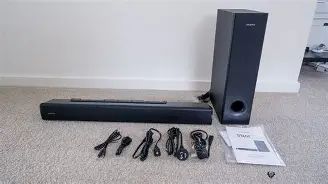
How to avoid it: Prioritize a soundbar with a dedicated center channel or dialogue enhancement mode. During in-store listening or trial periods, test with talk-heavy content (news segments, dramas, sitcoms). Check whether the Creative Stage Pro offers modes or EQ presets that boost midrange clarity and whether those settings are user-adjustable.
Mistake 6 — Forgetting about firmware and vendor support
Soundbar features and performance can improve with firmware updates. Buyers sometimes ignore the manufacturer's track record for updates, leaving them stuck with buggy features, connectivity glitches, or missing codec support.
How to avoid it: Research Creative’s history of firmware updates and support responsiveness. Confirm the update process (app, USB, or automatic) and whether the device supports ongoing improvements. A product with accessible, well-documented firmware tools will age better and fix issues that only appear after real-world use.
Find top-rated TVs & Home Theater products at great prices.
Shop Amazon →Creative Stage Pro: Detailed analysis and real-world performance
The Creative Stage Pro is designed for buyers seeking clean dialogue, compact footprint, and flexible placement options. In practical use, it often excels at improving TV audio without overwhelming living spaces. The bar’s tuning emphasizes vocal clarity and controlled bass—useful for evening viewing where neighbors and roommates make excessive volume impractical.
Connectivity is a major selling point in everyday scenarios: casual streaming from phones (Bluetooth), direct connections to older TVs (optical), and simplified TV control through HDMI-CEC when an ARC connection is available. For buyers who switch between a streaming stick, a cable box, and a console, the simplicity of a single path to the TV is appealing—less cable swapping, fewer remote headaches.
In movie mode, the Stage Pro often widens the soundstage relative to built-in TV speakers and introduces more satisfying low-end presence when the subwoofer is properly sited. For music playback, the bar handles midrange instruments and vocals well for pop and acoustic material, but audiophiles will notice the limits of a compact three-channel layout compared with larger hi-fi systems. For gaming, latency performance depends on input method—wired connections or HDMI ARC typically produce very low lag, while Bluetooth can introduce latency that affects competitive play.
Build quality and ergonomics matter in daily use. A slim profile makes the Stage Pro easy to integrate beneath modern TVs and on desktops, and a straightforward remote or onboard controls reduce friction. However, buyers should test or verify how the bar interacts with their TV remote (volume control mapping, power on/off behavior) because CEC implementations vary across TV brands and firmware versions.
Real-world use cases
- Small apartment movie nights: Provides fuller bass and clearer dialogue than TV speakers without needing a large system.
- Desktop or monitor upgrade: Compact footprint and simple Bluetooth pairing make it suitable for desks where space is limited.
- Casual music playback: Good for conversational listening; not intended as a dedicated hi-fi system but pleasant for background music.
- Console gaming in a multi-use living room: Favor wired/HDMI ARC connections for minimal latency; acceptable for single-player console games.
Pros & Cons
- Pros
- Compact design that fits beneath most modern TVs and desks.
- Improved dialogue clarity over built-in TV speakers, often with a dedicated center channel or dialogue mode.
- Flexible connectivity options (Bluetooth, optical, HDMI ARC in many setups) for a variety of source devices.
- Wireless subwoofer capability allows punchy bass without large cables running across the room.
- Straightforward setup and everyday ergonomics (remote, simple controls).
- Cons
- Limited immersive surround capability compared with multi-speaker systems.
- Performance depends heavily on room size and placement; larger rooms may need more power or additional speakers.
- Bluetooth playback can introduce latency and reduced fidelity compared with wired connections.
- Some buyers may need firmware updates or support to tune advanced features; vendor response varies.
How the Creative Stage Pro compares (quick reference)
| Category | Creative Stage Pro | Typical Entry-Level TV Upgrade | Full Home Theater Soundbar |
|---|---|---|---|
| Best for | Small–medium rooms wanting compact improvement in dialogue and bass | Small rooms or basic upgrades where price is the primary concern | Large rooms and viewers who want near-surround immersion and higher fidelity |
| Connectivity | Bluetooth, optical, HDMI ARC (varies by TV compatibility) | Often Bluetooth + optical only | Multiple HDMI inputs, HDMI eARC, optical, advanced wireless options |
| Bass | Wireless subwoofer provides solid low end for compact spaces | Limited bass; may lack external subwoofer | Powerful, tunable subwoofer(s) designed for deep impact |
| Surround | Pseudo-surround processing; not true discrete surround | Mostly stereo or basic virtual modes | Discrete surrounds, upfiring channels, Atmos support on many models |
| Price / Value | Mid-range value for a compact system | Lowest cost, fewer features | Premium pricing for extensive features and power |
Buying guide: Questions to ask and features to verify
To avoid the mistakes outlined earlier, buyers should run through a short checklist before purchasing a Creative Stage Pro or any compact soundbar:
- What is the primary use case? Movies, TV dialogue, music, or gaming? Prioritize a soundbar that excels at the most common use. For dialogue-heavy viewing choose a strong center channel and dialogue enhancement modes; for movie nights prioritize subwoofer performance and dynamic range.
- Does the TV have the right outputs? Confirm HDMI ARC/eARC, optical, or HDMI passthrough options on both the TV and the soundbar. If using older TVs, ensure the bar accepts optical or analog inputs.
- How large is the room? Measure the seating distance and room volume. For larger rooms, plan for a higher-powered bar or additional speakers.
- Where will the subwoofer go? Decide placement early—wireless subs are convenient, but location will dramatically affect bass performance.
- Is low latency important? For competitive gaming, prefer wired or HDMI ARC connections and verify whether the soundbar has a “game” mode that minimizes processing delay.
- What firmware and support is available? Check whether the manufacturer provides regular updates, the process for installing them, and the support channels in case of issues.
- What are the return and trial policies? If possible, buy from a retailer that offers a trial period so the bar can be tested in the home environment. In-home listening is the best way to validate bass, dialogue clarity, and latency.
- Does the bar match the TV visually and physically? Verify height (so it doesn’t block the TV sensor/IR), width (does it fit under the TV or on the console), and mounting options if wall installation is intended.
Setup tips to maximize performance
- Center the soundbar below the TV and align it toward the primary listening position.
- Allow the subwoofer some breathing room—don’t trap it in a closed cabinet unless testing shows acceptable bass behavior.
- Use the TV’s HDMI-CEC settings to link volume and power controls for a seamless experience; test to ensure CEC doesn’t cause unexpected behavior.
- Run through any built-in calibration or EQ presets and tune them to real content—dialogue-heavy news and an action movie are useful test material.
- For Bluetooth listening, test latency and consider wired connections for latency-sensitive uses.
Conclusion
The Creative Stage Pro can represent a meaningful step up from a TV’s built-in speakers, offering clearer dialogue, better bass, and convenient connectivity in a compact package. However, buyers who skip compatibility checks, misunderstand the limits of single-bar surround processing, ignore room acoustics, or underestimate the impact of placement are likely to be disappointed. By clarifying the primary use case, confirming inputs and TV compatibility, measuring the room, and planning placement in advance, most buyers can avoid these pitfalls and enjoy a substantially better listening experience. When in doubt, test the bar in the intended environment or choose a retailer with a reasonable return window—real-world listening remains the best way to confirm whether the Creative Stage Pro is the right fit for a given home.