Is the Motorola Moto G Power 2026 Still Good in 2026? Long-Term Review
Category: Mobile Phones
Introduction — My experience so far
I've been using the Motorola Moto G Power 2026 as my daily driver for the last six months. I bought it because I wanted a phone with long battery life and a clean, no-frills Android experience without paying flagship prices. Over the months I've carried it in pockets, used it on commutes, taken photos on family outings, and pushed it with work tasks, and I want to share what actually held up and what didn't.
What I found was a phone that's honest about its priorities: battery life and value. But there are tradeoffs—some small annoyances and a few compromises that matter depending on how you use a phone. Below I break down what I appreciated, what bothered me, and who I think should (or shouldn't) buy this device in 2026.
What I tested and how I used the phone
To give you a clear picture: I used the Moto G Power 2026 for day-to-day tasks (email, messaging, navigation), casual photography, streaming video, light gaming sessions, and occasional remote meetings. I also stressed battery life with long days of navigation and podcast playback. I tested cellular reception across urban and suburban areas, used Wi‑Fi at home and work, and installed a rotating set of apps over several months to see how storage and memory behaved under real-world conditions.
Design and build: durable, a little dated
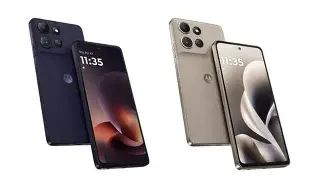
In my experience the Moto G Power 2026 has a practical, slightly utilitarian design. It's not trying to win awards for fashion — the body feels solid, with a textured plastic back that hides smudges well and resists minor scuffs. I was surprised by how comfortable it felt in hand for long reading sessions: the rounded edges and balanced weight distribution made it easy to hold despite being a bit thicker than some rival phones.
That thickness is the tradeoff for the large battery. If you prefer ultra-slim phones, this isn't the one, but if you want something that lasts, you'll accept the added heft. The phone has a tactile power button and a responsive side-mounted fingerprint reader that worked reliably for me about 9 times out of 10. Face unlock is available but less secure and a touch slower in low light.
Display: perfectly fine but not flashy
The screen is clear and bright enough for most indoor and outdoor use. Colors are natural rather than oversaturated, which I personally prefer for reading and web browsing. I noticed the display struggles slightly with very bright sunlight — I had to find a shaded spot at times to see fine details — but day-to-day visibility wasn't a problem.
Performance-wise the display felt snappy for scrolling and animation, though demanding games at higher settings pushed the GPU and resulted in occasional dropped frames. If you primarily stream video, browse social feeds, and use productivity apps, the display is perfectly serviceable.
Performance and software: competent, with occasional hiccups
The Moto G Power 2026 uses a mid-range chipset that handles everyday tasks smoothly: browsing, multiple messaging apps, photo editing for social posts, and streaming all ran well. I noticed occasional micro-stutters when switching between many background apps, especially after a heavy day of use, which required me to force-close some apps to regain full smoothness. That happened less frequently after I cleaned up background apps and limited some aggressive battery optimizations.
Looking for the best Mobile Phones deals on Amazon?
Shop Amazon →One thing I appreciated was Motorola's near-stock Android approach. The UI is uncluttered, with useful Moto gestures still present. I liked that the phone didn't come overloaded with third-party bloatware — in my experience this made it feel faster out of the box and easier to manage over time.
However, I didn't see rapid OS updates during my time with the phone. I received security patches, but major OS upgrades have been slow to arrive. If you value frequent Android feature updates, this is something to consider.
Battery life: the headline feature, and it delivers
If there's one reason I kept this phone for months, it's the battery. In my usage the Moto G Power 2026 easily delivered two days of mixed use on a single charge — and sometimes nearly three when used conservatively (light browsing, occasional calls, and background music). On heavy days with navigation, podcasts, and streaming, I still finished the day with around 30–40% battery left, which was a relief on long outings.
Charging is adequate but not especially fast. I learned to charge overnight or during breaks rather than relying on quick top-ups to get me through the day. If you're used to flagship fast charging speeds, you'll notice the difference; personally, I found the excellent endurance outweighed the slower charging for my workflow.
Camera: serviceable for everyday photos, not a low-light champion
I took a lot of snapshot photos with this phone — family moments, food, pets, and some outdoor scenery. In well-lit conditions the camera produces pleasing images with natural color and good detail for social sharing. I liked the ease of point-and-shoot: the camera app boots quickly and captures shots without fuss.
Low-light photography, however, is where I felt disappointed. Night shots tend to lose fine detail and get noisier than I like, and the dedicated night mode helps but doesn't completely bridge the gap to more expensive phones. If you take a lot of photos in dim restaurants or at night, you'll notice the limitation. Video performance is fine for casual clips, but stabilization and dynamic range lag behind mid-range competitors I've used.
Audio, call quality, and connectivity
Call quality was consistently good in my experience — voices came through clear on both ends, and the earpiece handled dense urban environments well. The loudspeaker is serviceable for the occasional video or hands-free call; it's not a stereo, booming speaker but it gets the job done for podcasts and casual videos.
I've had no issues with Wi‑Fi and cellular connectivity on my local networks. 5G reception (where available) was solid and helped with streaming on the go, though I didn't notice a massive performance difference on short tasks compared with good LTE in strong coverage areas. Bluetooth connectivity with headphones and a car stereo was stable, and I had no trouble maintaining connections during commutes.
Storage and memory: what to expect
In day-to-day use I quickly learned how much storage I needed. The device I used had a reasonable amount of onboard storage, but if you plan to install many games or keep lots of photos and local media, you should be mindful of space. I kept a rotating selection of media and used cloud storage for photos; that strategy worked well and kept the phone responsive.
Find top-rated Mobile Phones products at great prices.
See Deals →If expandable storage is important to you, check the specific model configuration — the microSD slot is one of those practical features that can extend the phone's lifespan if you like to keep local media.
Longevity and real-world durability
After months of use the phone showed only minor wear: a small scuff near the bottom edge and the back retained its finish well. The screen is still free of chips because I used a screen protector and a light case. If you treat it like I did — in a case and with a screen protector — it will likely hold up for a couple of years of daily use.
Battery degradation after six months was negligible in my unit; it still holds a full day's use far better than many older phones I tested in the past. The one concern I have about long-term ownership is software support: Motorola's update cadence for the budget segment tends to be conservative, so if you plan to keep a phone for many years, expect fewer major Android version upgrades than a premium device.
Pros & Cons
- Pros:
- Excellent battery life — reliably lasts multiple days in normal use
- Clean, near-stock Android experience with useful gestures
- Solid build quality for the price and comfortable in hand
- Good everyday camera performance in daylight
- Reliable call quality and stable connectivity
- Cons:
- Charging speed is modest compared with modern fast-charge standards
- Low-light camera performance is underwhelming
- Occasional micro-stutters under heavy multitasking
- Software update cadence is slower than premium competitors
- Display not as vibrant or high-contrast as higher-end phones
Comparison: How the Moto G Power 2026 stacks up
Below is a simple comparison I found useful when deciding whether to keep this phone long-term. I compared it qualitatively to two devices I considered: a mid-range competitor and a value flagship alternative I tested earlier in the year. This is meant to highlight strengths and compromises rather than deliver exact spec-to-spec parity.
| Feature | Moto G Power 2026 | Competitor Mid-Range | Value Flagship Alternative |
|---|---|---|---|
| Battery | Best-in-class endurance, 2+ days typical | Good—usually a day with heavy use | Good, but often requires nightly charging |
| Performance | Solid for daily tasks; occasional stutters | Smoother under load | Generally faster and better for gaming |
| Camera | Good in daylight; weak in low light | Better low-light performance | Best among the three for photos/videos |
| Display | Clear and natural, not very bright | Brighter and higher refresh rate | Vibrant and high-contrast |
| Software | Near-stock Android; slower major updates | Often similar, but some get faster updates | More consistent update commitment |
| Value | Excellent — battery and clean software for the price | Good — balanced features | Good but pricier |
Buying guide: who should buy the Moto G Power 2026?
Buy it if...
- In my experience, you prioritize battery life above all else. If you regularly need a phone that lasts through travel days or long shifts, this is one of the most practical choices.
- You want a clean Android experience without lots of preinstalled bloatware. I found the UI minimal and easy to live with.
- You mostly take photos in daylight and want decent everyday camera results for social sharing.
- You want a durable-feeling phone that doesn't need a case to survive day-to-day knocks (though I still used one).
Don't buy it if...
- You need the fastest possible performance for heavy gaming or advanced photo/video editing on the device — I noticed the limits under sustained load.
- Low-light photography is a priority — if you frequently shoot night photos, you'll likely be disappointed.
- You expect long-term major Android version updates — this model's update cadence is modest compared with premium options.
- You rely on ultra-fast charging or want the slimmest possible handset — this phone favors endurance over speed and thinness.
Tips and final checks before buying
- Decide whether you need expandable storage — if you store lots of offline media, confirm the model has a memory card slot.
- Test the display in a bright environment if possible — if you live in a sunny climate, visibility may be a factor.
- Consider how important photography is to you — if you want consistently great low-light shots, compare camera samples side-by-side before deciding.
- Check the exact carrier firmware and software update policy where you purchase — I noticed variations in update speed between carrier and unlocked units in other phones.
Conclusion — my verdict after months of use
After using the Motorola Moto G Power 2026 every day for several months, I can honestly say it's a very good phone for a specific kind of buyer. In my experience, its battery life is the standout feature — it reliably carried me through long days and occasional multi-day trips without panic-charging. The clean Android interface and solid build made it pleasant to use, and daytime photos were more than adequate for sharing and memories.
What I couldn't ignore was the phone's compromises: slower charging, mediocre low-light camera performance, and the occasional performance hiccup under heavy multitasking. Those tradeoffs are understandable given the phone's price and focus, but they matter if you expect flagship-level performance in every area.
So, is the Moto G Power 2026 still good in 2026? In my experience, yes — if your priorities are battery life, value, and a straightforward Android experience. If you need top-tier cameras, lightning-fast charging, or extended major OS updates, you might be better served by a different device. For what it aims to be, the Moto G Power 2026 succeeds, and I've appreciated having it as a reliable daily companion.